
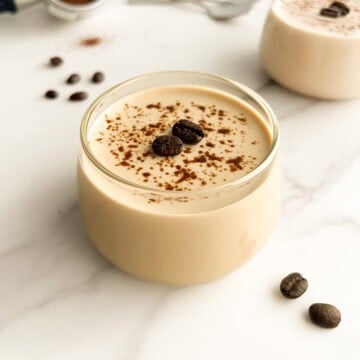
Coffee panna cotta is a creamy, no-bake Italian dessert infused with rich espresso flavor. Made with sweetened cream, milk, and gelatin, it sets into a delicate, silky texture with a smooth coffee finish. Traditionally served chilled in glasses, it's an elegant make-ahead dessert that's easy to prepare!
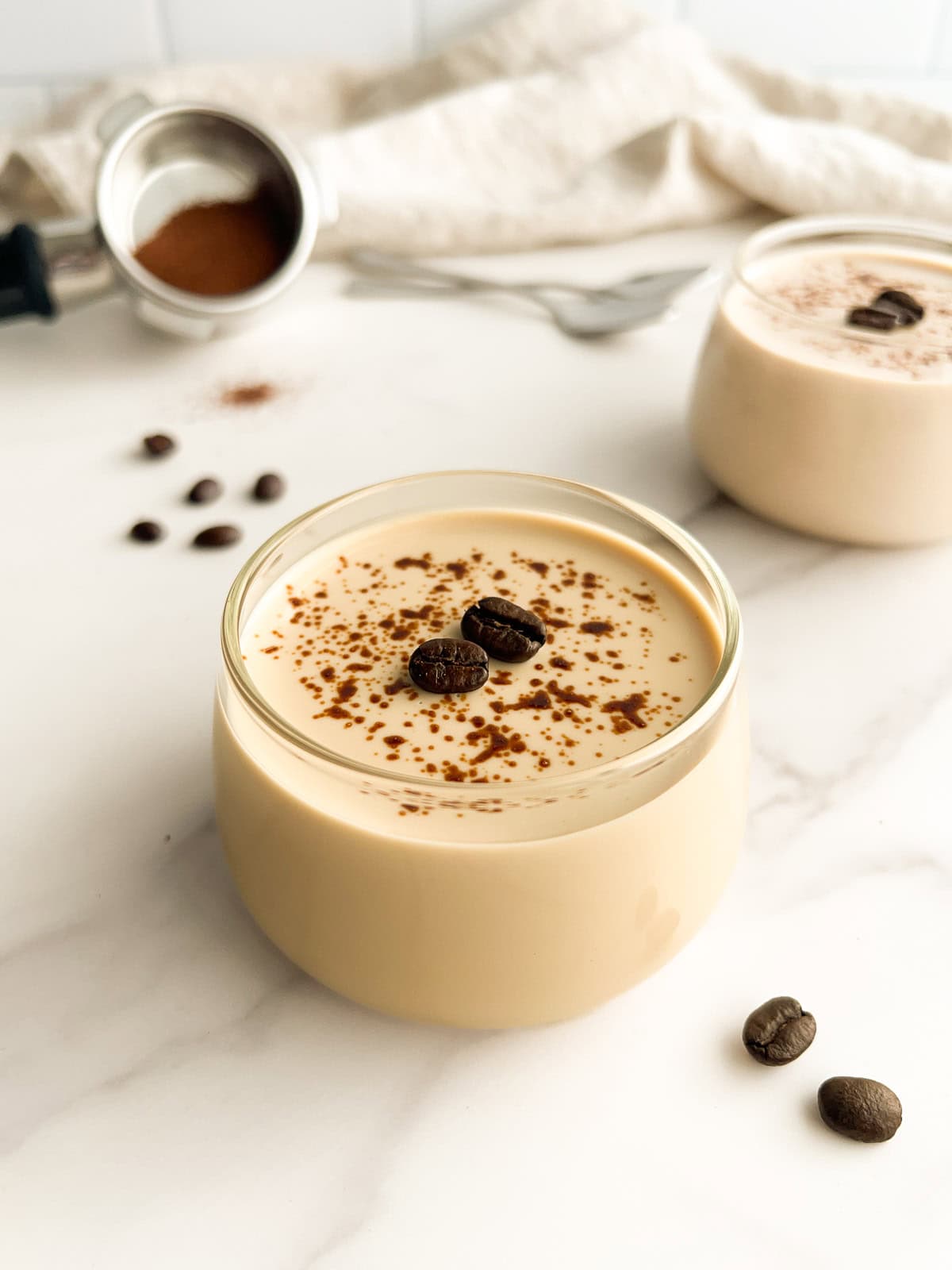
My Italian family is from Piedmont, the region where panna cotta originates, so I've always felt deeply connected to this dessert. Coffee panna cotta combines traditional panna cotta (cooked cream) with the flavor of espresso. It's one of my favorite variations, blending two icons of Italian culture - espresso and panna cotta - into one dessert. If you're looking for more flavor variations, you'll love my pumpkin panna cotta for a seasonal twist!
Recipe at a Glance
- ⏱️ Total Time: 6 hours 20 minutes - 10 minutes prep; 10 minutes cook; 6 hours chill
- 🍽️ Servings: 6
- 🧑🍳 Method: stovetop and ice bath
- 🥣 Key Ingredients: espresso, gelatin, milk, cream
Why You'll Love This Recipe
- Traditional silky texture: a balanced ratio of gelatin and cream creates a delicate panna cotta that's never rubbery.
- Rich coffee flavor: espresso is evenly incorporated into the cream base for smooth, well-rounded flavor.
- Foolproof technique: a simple ice bath cools the panna cotta evenly, preventing it from separating into layers as it sets.
- Easy serving: served in glasses for an elegant presentation - no unmolding required.
- Make-ahead friendly: chills and sets in advance, making it ideal for entertaining.
Jump to:
Ingredients
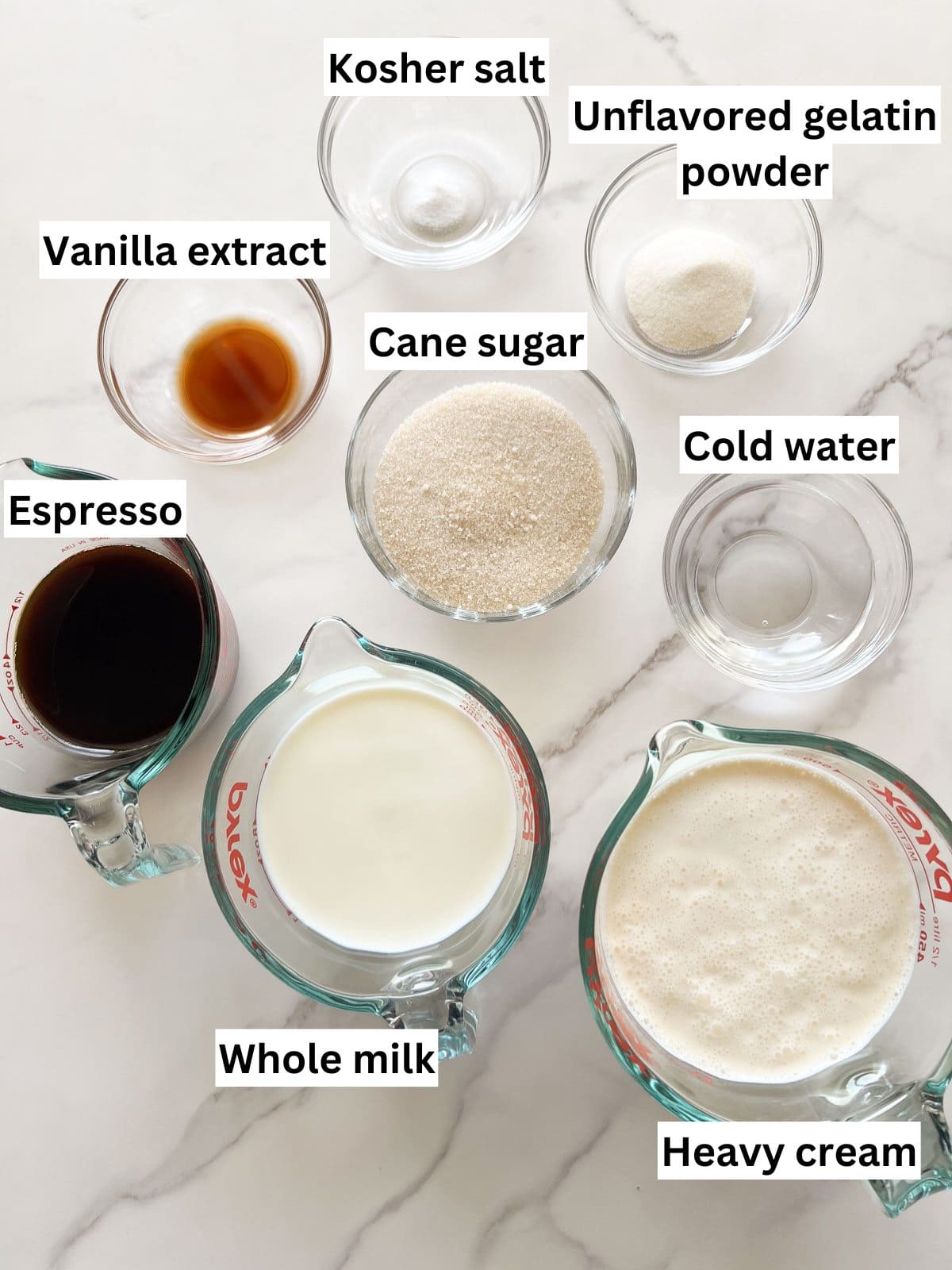
Ingredient Notes:
- Unflavored gelatin powder: this gives the panna cotta its structure. I use gelatin with a bloom strength of 225, which creates a soft set without becoming rubbery. Standard grocery brands, like Knox, usually fall within this range. When available, I prefer grass-fed beef gelatin because it has a neutral flavor and dissolves cleanly into the cream base.
- Espresso: freshly brewed espresso provides the deepest, most complex coffee flavor, often with chocolate or caramel undertones. You can also use instant espresso powder (dissolved in hot water) or strongly brewed coffee, including decaffeinated alternatives. If you have extra espresso on hand, you'll love my espresso ice cream, a frozen treat that highlights the same rich coffee flavor.
- Heavy cream: I prefer grass-fed cream containing at least 36% fat for the richest flavor and look for options made with just cream (no gums or additives). In my experience, pure cream creates the most delicate, silky panna cotta.
- Whole milk: this lightens the cream, so the panna cotta sets with a melt-in-your-mouth texture. I prefer grass-fed milk for it's rich flavor, a difference you'll notice in other creamy Italian desserts, like this chocolate budino.
See recipe card for quantities.
Substitutions and Variations
- Use gelatin sheets: instead of powdered gelatin, you can substitute with 4 gold gelatin sheets.
- Add a garnish: finish with a small dollop of whipped cream using my whipped cream dispenser recipe. It enhances the panna cotta's creamy finish. A sprinkle of espresso powder, cocoa powder, or a few roasted espresso beans makes a beautiful final touch. I also love adding a drizzle of caramel on top, using the same sauce as my salted caramel budino recipe.
Instructions
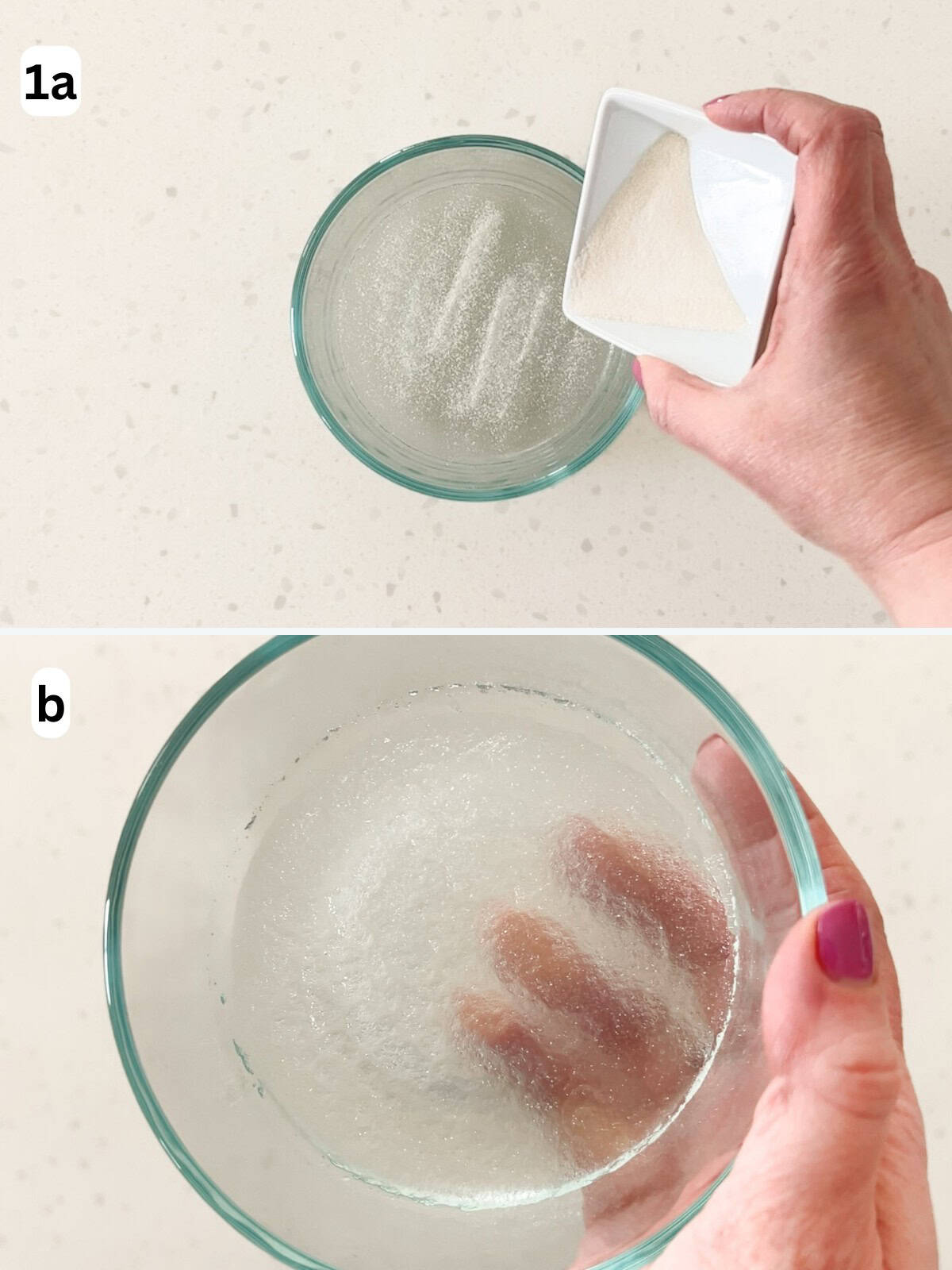
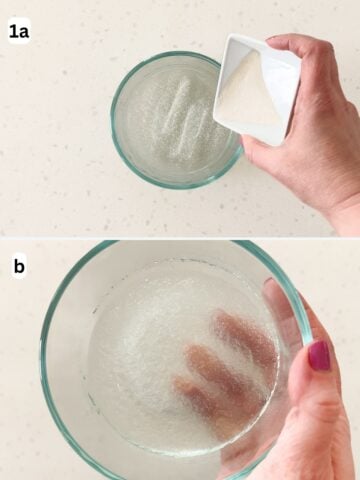
- Step 1: Place the cold water in a small bowl and sprinkle the gelatin across the top (image 1a). Use a spoon to gently submerge any floating powder. Let sit for 5 to 10 minutes until it reaches a jelly-like consistency (image 1b).
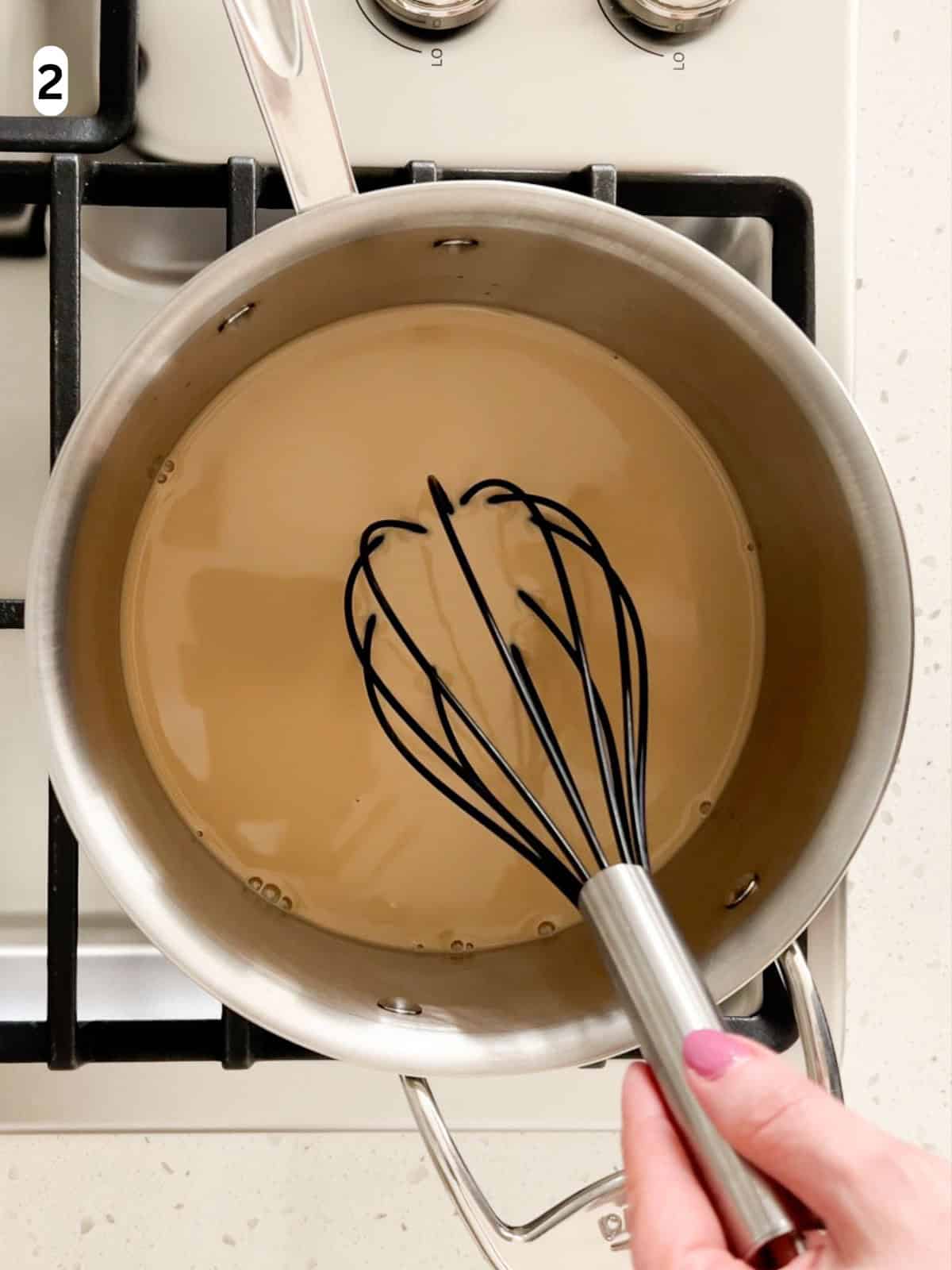
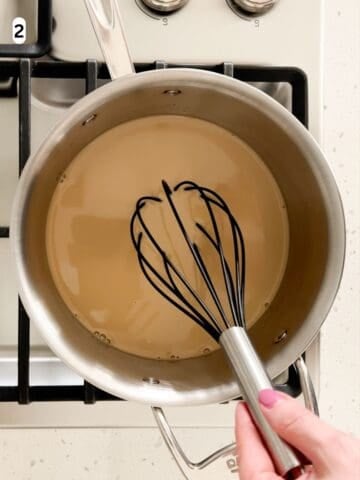
- Step 2: In a medium saucepan, combine the milk, cane sugar, vanilla, salt, and espresso. Warm gently over medium heat until the sugar dissolves and the mixture reaches 180°F (82°C). You'll see small bubbles form along the edges. Do not let the mixture boil (image 2).
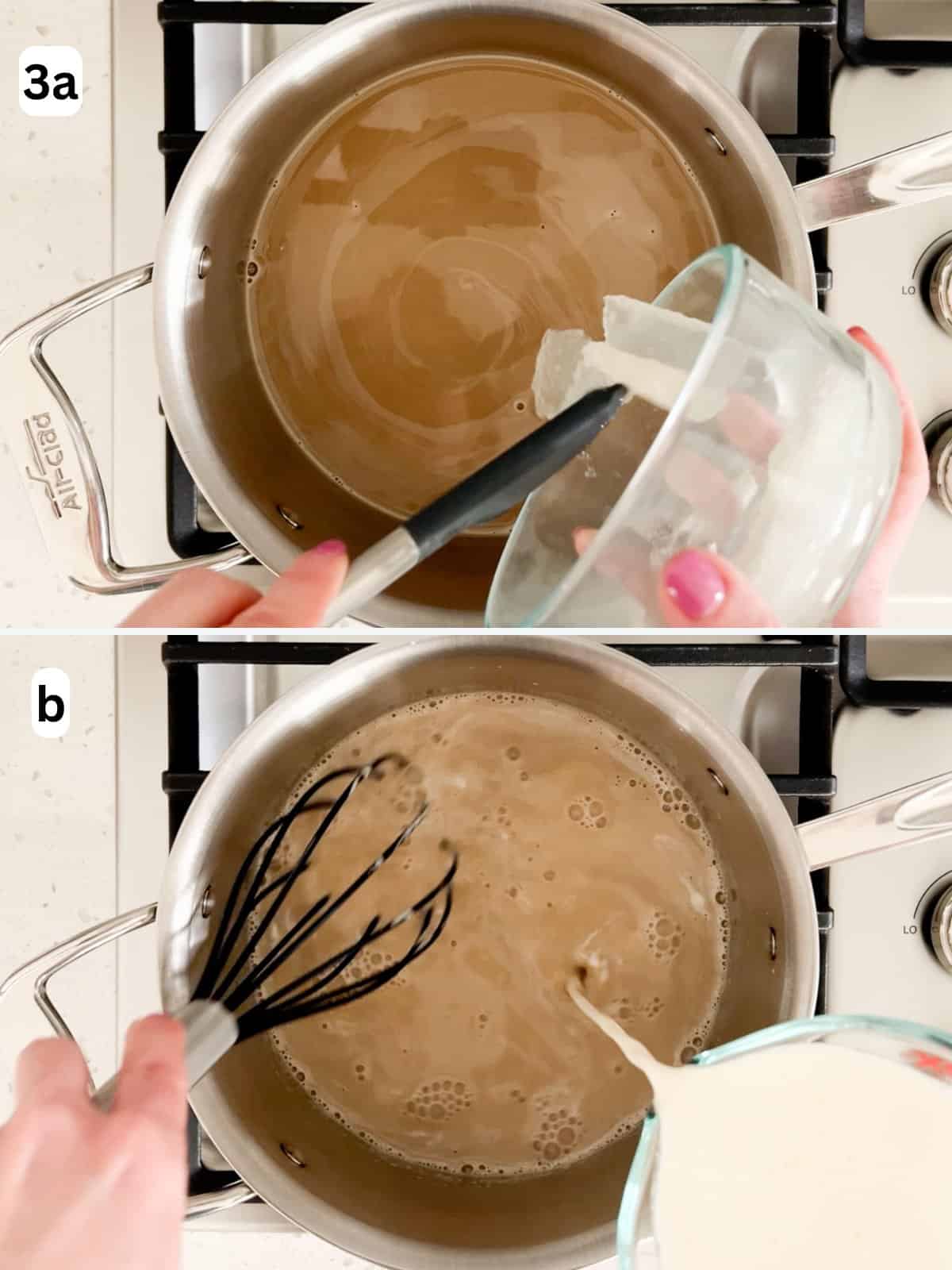
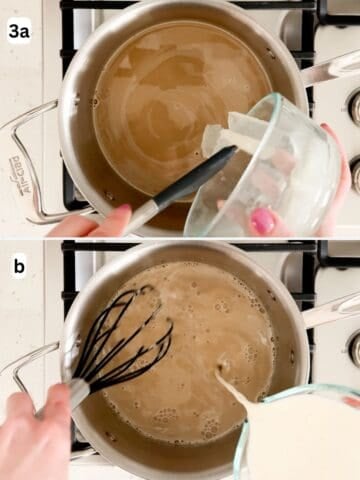
- Step 3: Remove the saucepan from the heat. Add the bloomed gelatin and whisk until fully dissolved (image 3a). Slowly pour in the heavy cream, whisking until combined (image 3b).
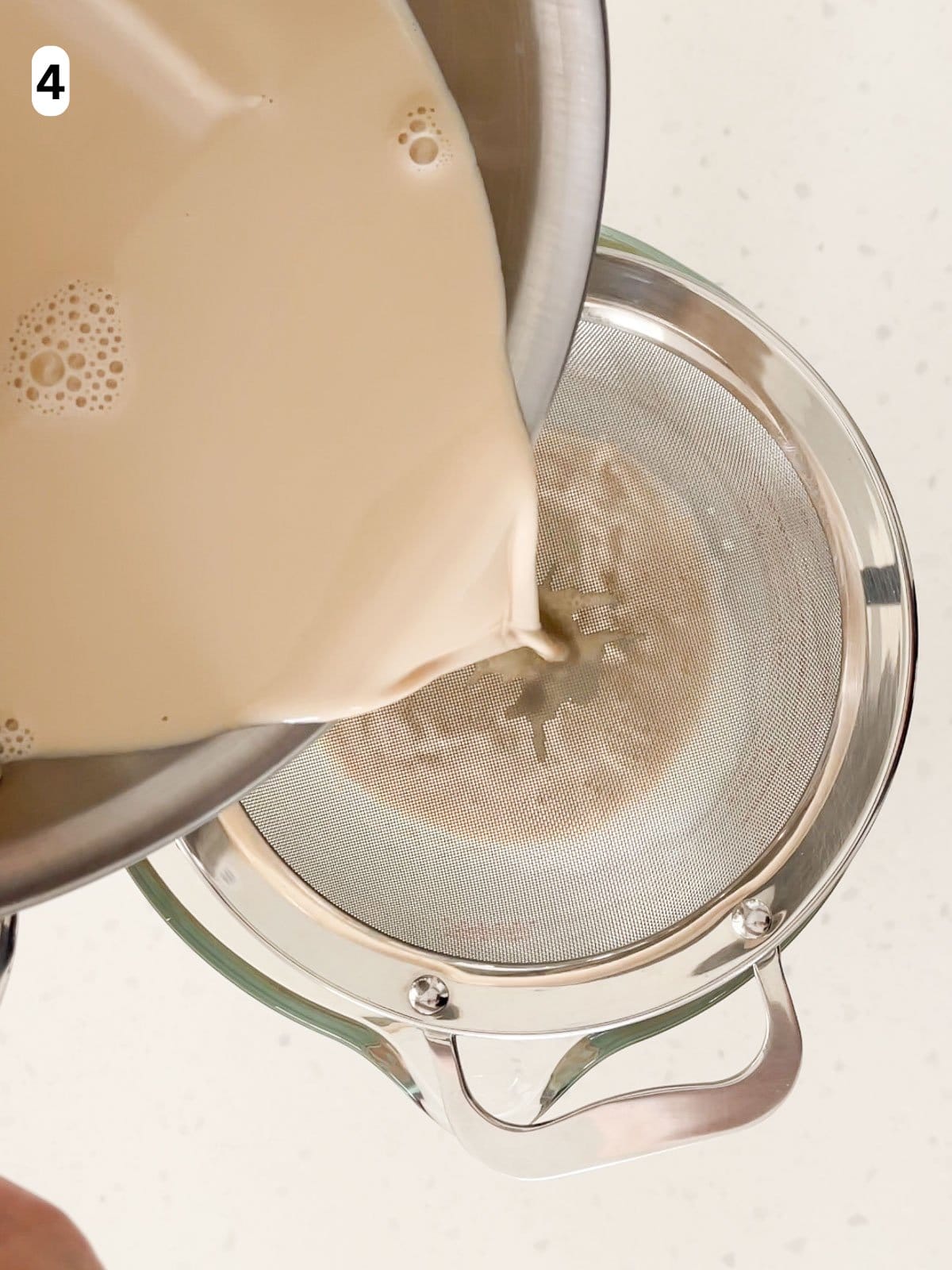
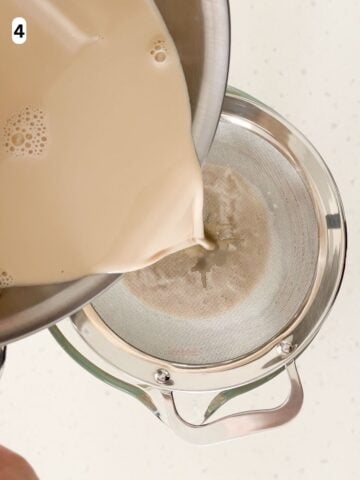
- Step 4: pour the mixture through a fine mesh strainer into a large bowl or measuring cup (image 4).
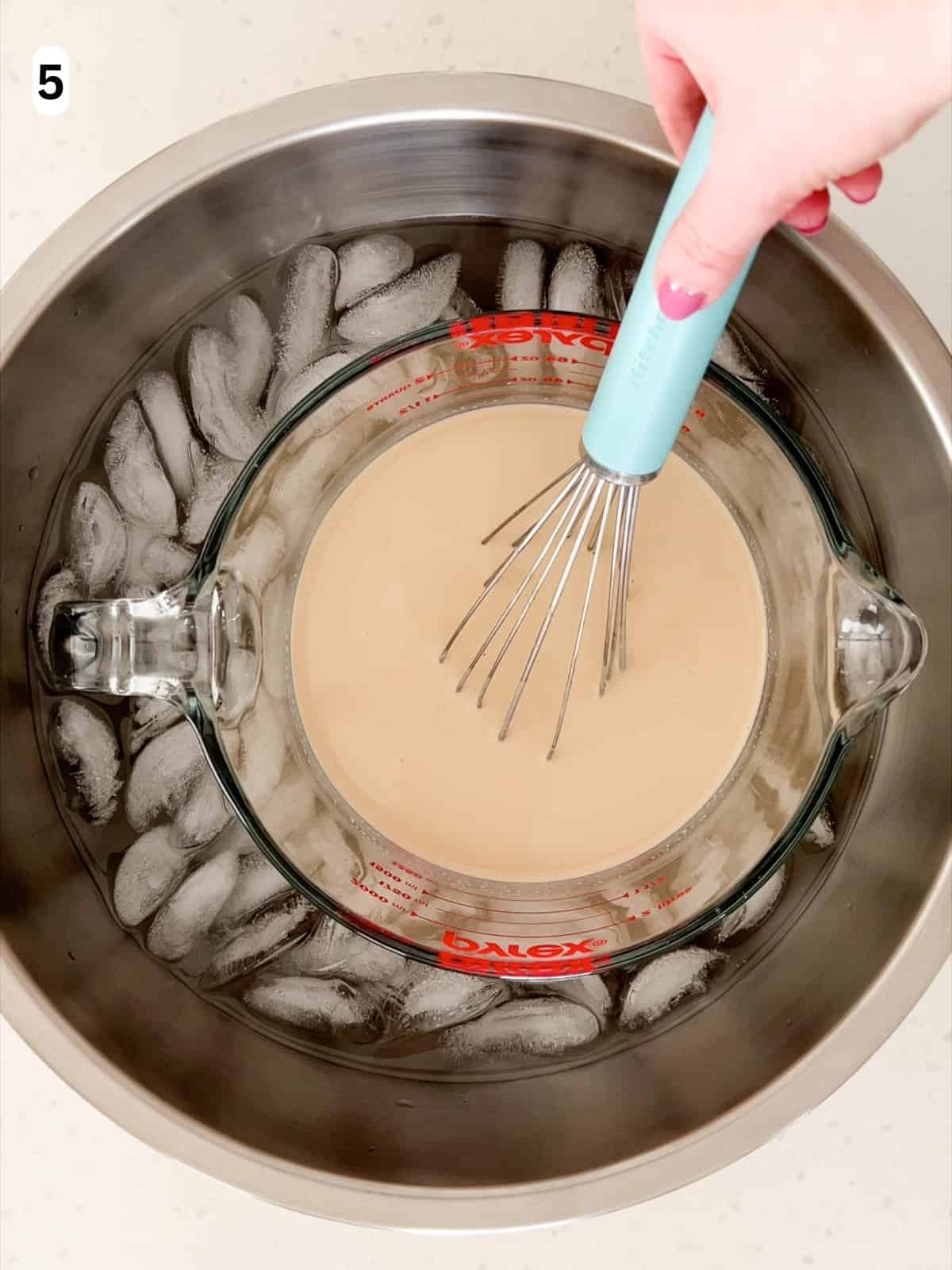
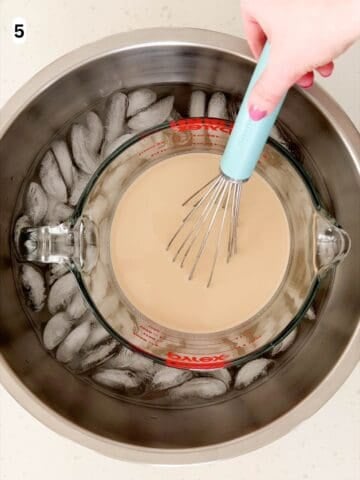
- Step 5: Make an ice bath by filling a large bowl halfway with ice and water. Place the bowl containing the panna cotta mixture into the bath, ensuring no water spills inside. Let it cool, whisking occasionally, until it reaches 55-60°F (13-16°C), which takes about 15 minutes. This prevents the panna cotta from separating into layers as it cools (image 5).
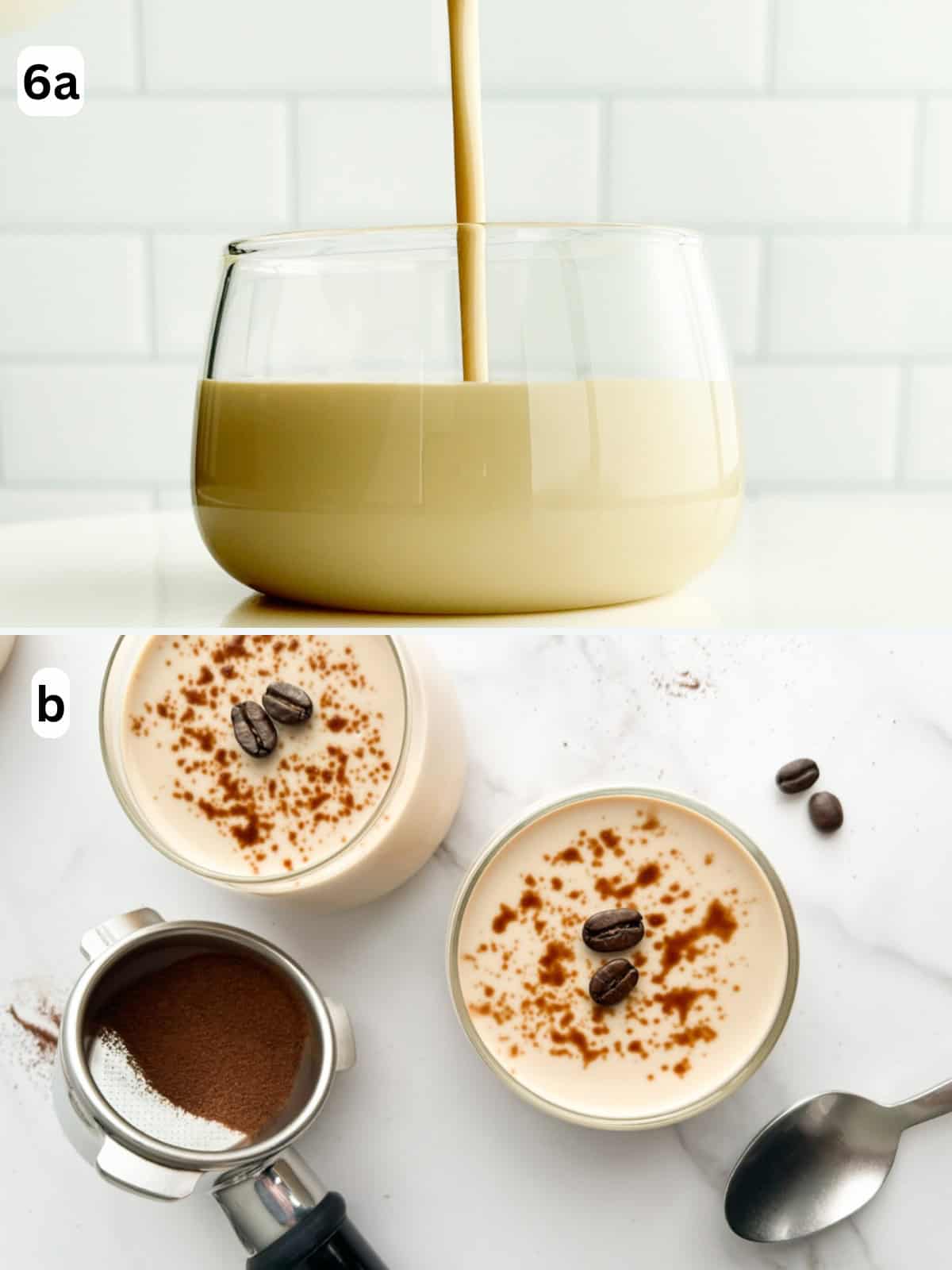
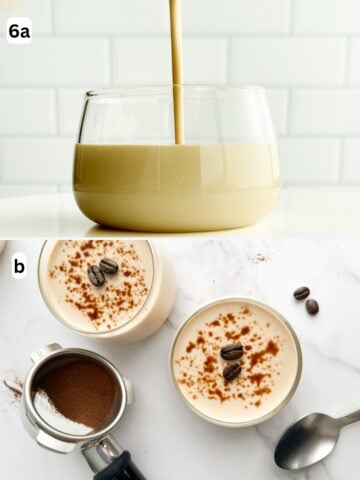
- Step 6: Once the panna cotta mixture reaches temperature, pour it into individual serving glasses (image 6a). Cover and refrigerate for at least 6 hours, though chilling overnight yields the best texture. When set, it should feel lightly firm to the touch and gently wobble when shaken. Garnish with espresso powder, a few roasted espresso beans, or the topping of your choice (image 6b). Serve chilled and enjoy!
Storage & Make Ahead
- Storage: coffee panna cotta can be stored in the refrigerator for up to 3 days. Keep it tightly covered to prevent the surface from drying. Freezing is not recommended, as it can alter the panna cotta's consistency once thawed.
- Make ahead: coffee panna cotta can be prepared a day in advance, making it perfect for entertaining. Refrigerate until fully set. Serve chilled, adding whipped cream and any garnishes just before serving.
Save This Recipe! 💌
Expert Tips
- Don't overheat the gelatin: heat the panna cotta mixture just until steaming (about 180°F/82°C), then remove from the heat before adding the gelatin. Boiling can weaken gelatin's setting power.
- Add the cream off heat: stir room temperature cream into the base after it's off the heat. The fresh cream balances the espresso flavor and keeps the texture delicate and silky.
- Strain the panna cotta: pour the mixture through a fine-mesh strainer to remove any undissolved gelatin for the smoothest finish.
- Use an ice bath to prevent separation: briefly cool the panna cotta mixture over an ice bath before pouring into individual glasses. This keeps the espresso evenly suspended and prevents layering as it sets -a reader-favorite technique I also use in my pumpkin panna cotta.
FAQ
Coffee panna cotta can separate when the mixture is poured into individual serving glasses while still too warm. As it chills, the heavier espresso can settle toward the bottom before the panna cotta sets, creating visible layers (as shown in the image below).
To prevent separation, briefly cool the panna cotta over an ice bath before pouring into glasses. Whisk occasionally to keep the espresso evenly distributed. This helps the panna cotta set smoothly and uniformly.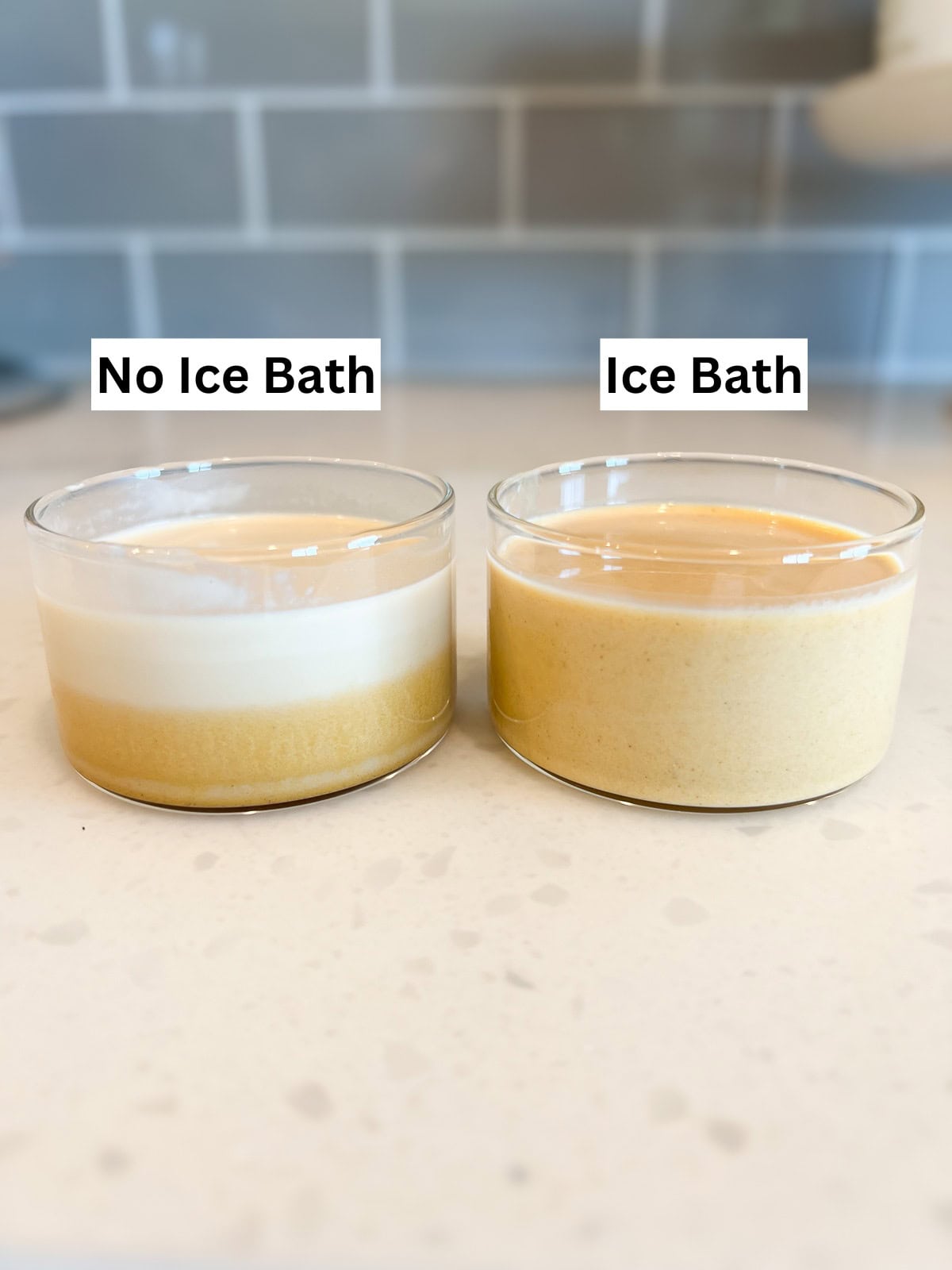
Coffee panna cotta is properly set when it feels lightly firm to the touch but gently wobbles when shaken. It should be delicate and softly set - easily spoonable, never stiff or rubbery.
If you notice chunks or small granules in your panna cotta base, the gelatin likely wasn't fully bloomed or the mixture wasn't warm enough when it was added. Return the base to low heat and whisk until completely smooth. Never let it boil, as high heat can weaken gelatin's setting power. Straining the mixture before pouring can also remove any undissolved bits for a perfectly smooth finish.
Yes, you can make coffee panna cotta with brewed or instant coffee instead of espresso, though the flavor will vary. Espresso provides a deeper, more complex flavor, while coffee creates a softer, lighter note. Strongly brew the coffee to avoid diluting the flavors. If using instant coffee, dissolve it in hot water before adding it to the mixture.
Whichever option you choose, use the same total liquid amount called for in the recipe to maintain the proper gelatin ratio and texture.
Coffee enhances panna cotta by adding roasted depth and complexity to the rich cream base. Espresso's chocolate and caramel notes complement the panna cotta's natural sweetness, creating a more layered, well-rounded flavor while preserving its delicate texture.
Serving Suggestions
- Serve coffee panna cotta after a classic Italian dinner like baked ziti, cacio e pepe, or pasta fagioli for a refreshing, coffee-forward finish.
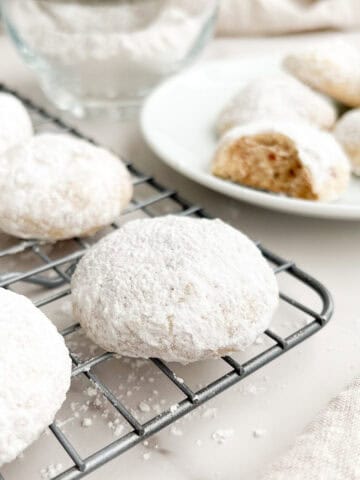
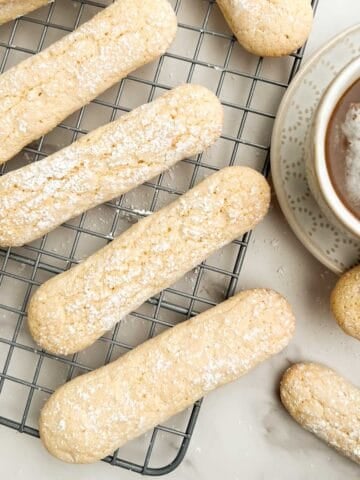
- Pair with almond biscotti, pignoli cookies, or Italian wedding cookies for an authentic Italian dessert spread.
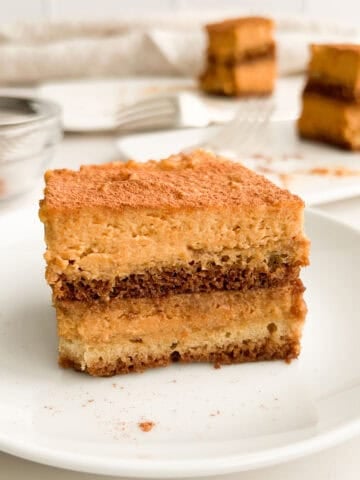
- Create a dessert trio with coffee panna cotta, a scoop of homemade vanilla ice cream and a slice of chocolate ricotta cake for the perfect balance of flavor and texture.
More Italian Puddings and Custards
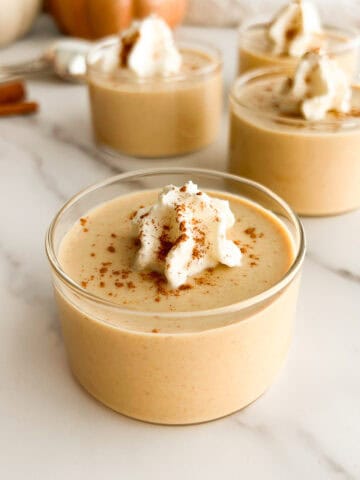
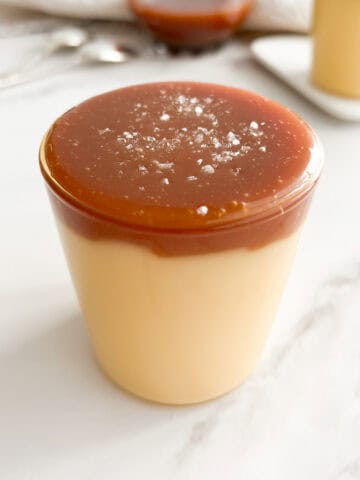
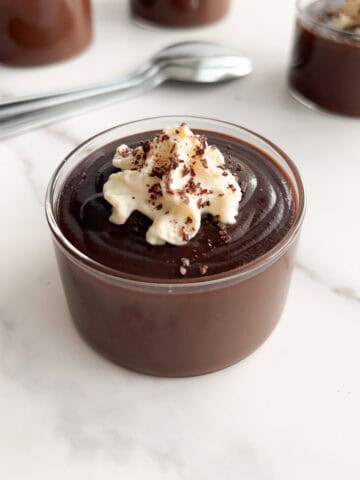
Did you make this recipe? Please leave a comment below! Subscribe to my newsletter for more recipes and tips straight to your inbox.
Recipe
Coffee Panna Cotta
Save This Recipe! 💌
Ingredients
- ¼ cup cold water
- 1 tablespoon unflavored gelatin powder (0.25 ounce or one, 7 gram packet)*
- 1 cup whole milk
- ½ cup cane sugar
- 1 teaspoon vanilla extract
- ⅛ teaspoon kosher salt
- ½ cup espresso (room temperature)*
- 2 cups heavy cream (room temperature)
Instructions
- Bloom the gelatin: place the cold water in a small bowl and sprinkle the gelatin evenly over the surface. Use a spoon to gently submerge any floating powder. Let sit for 5 to 10 minutes until thickened and jelly-like.

- Warm the panna cotta base: in a medium saucepan, combine the milk, cane sugar, vanilla extract, salt, and espresso. Warm gently over medium heat, whisking until the sugar dissolves and the mixture reaches 180℉ (82℃). You'll see small bubbles form around the edges; do not let it boil.
- Add the gelatin and cream: remove the saucepan from the heat. Add the bloomed gelatin, whisking until completely dissolved. Slowly pour in the heavy cream, whisking until fully incorporated.
- Strain: pour the mixture through a fine mesh strainer into a large bowl or measuring cup. I prefer a measuring cup so it's easier to pour into individual glasses later on.
- Place in an ice bath: fill a large bowl halfway with ice and water. Set the bowl containing the panna cotta mixture into the bath, making sure no water spills inside. Let cool, whisking occasionally, until the mixture reaches 55-60℉ (13-16℃), which takes about 15 minutes. This prevents the panna cotta from separating into layers as it cools.
- Pour, chill, and serve: once the panna cotta mixture reaches temperature, pour it into individual serving glasses. Cover and refrigerate for at least 6 hours, preferably overnight for the best texture. When set, it should feel lightly firm and gently wobble when shaken. Garnish with espresso powder, homemade whipped cream, or the topping of your choice. Serve chilled and enjoy!
Video
Notes
- Gelatin: this recipe works best with a gelatin bloom strength of 225 (Knox gelatin fits this range). You can substitute 4 gold gelatin sheets for the powdered gelatin. In Step 1 of the recipe, bloom the sheets by soaking them in cold water for 5 to 10 minutes until soft. Gently squeeze out the excess water and add the bloomed sheets in Step 3 (before the cream).
- Espresso: you can substitute with strongly brewed coffee, instant espresso, or instant coffee dissolved in hot water (including decaffeinated options). Use the same total amount - ½ cup - to keep the proper gelatin ratio. Let the liquid cool to room temperature before adding it to the milk base so the mixture heats evenly.
- Garnish: serve with a dollop of homemade whipped cream (see my whipped cream dispenser recipe). Finish with a sprinkle of espresso powder, cocoa powder, cinnamon, or a few roasted espresso beans. For added depth, drizzle with caramel using the same sauce as my salted caramel budino recipe.
- Equipment: a quick-read thermometer prevents overheating during cooking and ensures the panna cotta cools to the proper temperature before removing it from the ice bath.
- Storage: refrigerate, tightly covered, for up to 3 days. Freezing is not recommended because the texture can become grainy.
- Make ahead: prepare the panna cotta up to 1 day in advance and refrigerate until fully set. Serve chilled with the garnish of your choice.
Nutrition
The provided nutrition and storage information is estimated. Accuracy is not guaranteed.
See our Disclaimer for more information.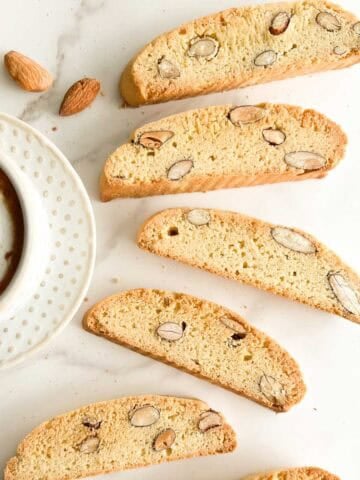
Maria D'Errico says
I hope you enjoy this coffee panna cotta as much as my family and I do! This recipe combines two of my favorite things, espresso and panna cotta, into one easy, delicious dessert. I'd love to hear what you think!