
This easy cacio e pepe recipe is an authentic Roman pasta made with Pecorino Romano, freshly cracked black pepper, and al dente bucatini. With easy to follow, step-by-step guidance, this recipe is your complete guide to making creamy, clump-free cacio e pepe at home, perfect for weeknights or simple weekend dinners!

Cacio e pepe, Italian for "cheese and pepper," is one of my favorite pasta dishes for its bold flavor, craveable creamy sauce, and simple ingredients. Although it looks straightforward, the technique can be tricky and takes some practice. If you've struggled with cacio e pepe before, you're not alone. One of the top questions I get about Italian cooking is how to make it creamy and clump-free!
That's why I wrote this recipe as a complete guide for home cooks who want to master this iconic Roman pasta. The secret comes down to heat control and pasta water. If it's too hot, the cheese seizes into those dreaded clumps. If it's too cool or there isn't enough water, it won't emulsify into a creamy sauce. In this recipe, I'll show you how to strike the right balance and share practical tips for troubleshooting the sauce.
Bucatini cacio e pepe is a versatile dish that's easy to serve! I love pairing it with a fresh side, like spinach and arugula salad or burrata caprese. If you're looking for more cheesy, comforting pasta dishes, you'll love this Italian mac and cheese, baked ziti, and pasta al forno!
Jump to:
Ingredients
You'll notice there's no butter or cream in this recipe. Traditional Roman cacio e pepe does not use them, and I find they dilute the bold flavor. Instead, we will achieve a smooth, creamy sauce with pasta water and heat control!
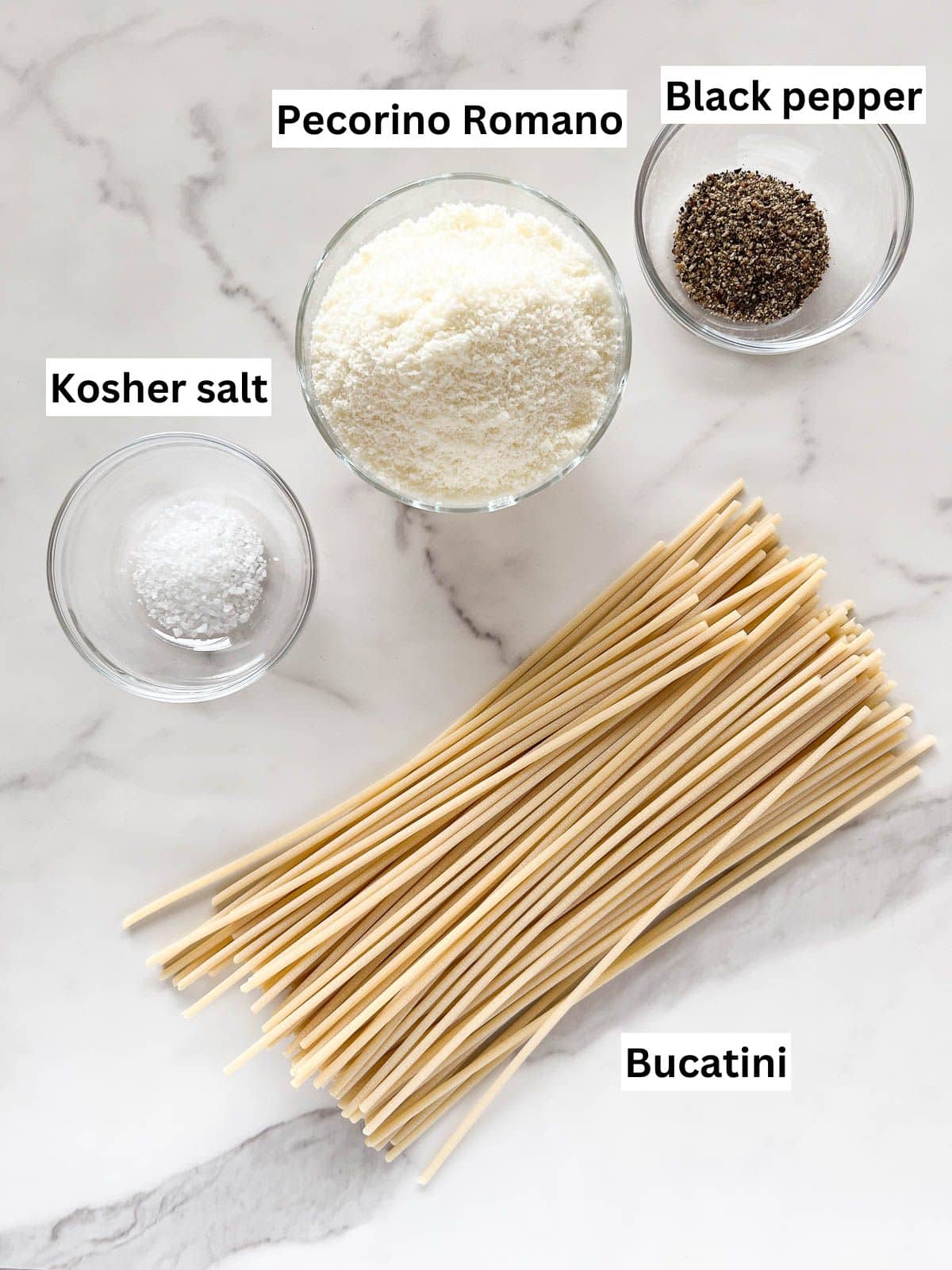
Ingredient Notes
- Bucatini: this is a long, thin pasta with a hollow center that captures the sauce, packing more flavor into every bite. Bronze-cut pasta is best, because its rough surface grips the sauce. It also releases more starch into the pasta water, helping the cacio e pepe emulsify into a creamy sauce.
- Pecorino Romano: always use freshly grated cheese, as packaged, pre-shredded versions may have anti-caking agents that cause clumps. I grate mine on the finest setting of a box grater so it blends smoothly into the sauce. If your local deli grates it fresh from the wheel, that's a great shortcut. I recommend using DOP Pecorino Romano for the best flavor, which has a red and yellow seal on the package. I usually get mine at Costco.
- Black pepper: use freshly cracked black pepper for the best flavor, since pre-ground won't have the same bite or aroma. I use Tellicherry peppercorns because they're bold and citrusy, but any good-quality whole peppercorns will do. I crack them to a medium grind (about the size of Kosher salt flakes) so the flavor spreads evenly without turning the sauce gray. Crack them right before cooking so the oils are fresh.
See recipe card for quantities.
Substitutions and Variations
- Use a different pasta shape: long, thin pasta works best for cacio e pepe because the larger surface area helps the sauce coat evenly. Spaghetti, tonnarelli, or linguine are great substitutions for bucatini.
- Use a different cheese: classic Roman cacio e pepe is always made with Pecorino Romano. If you don't have any on hand, you can use freshly grated DOP Parmigiano Reggiano or Grana Padano. It won't be the traditional Roman flavor, but it will still be delicious with a milder taste.
- Add a topping: for extra flavor and crunch, I love garnishing cacio e pepe with pangrattato (crispy Italian breadcrumbs).
Instructions

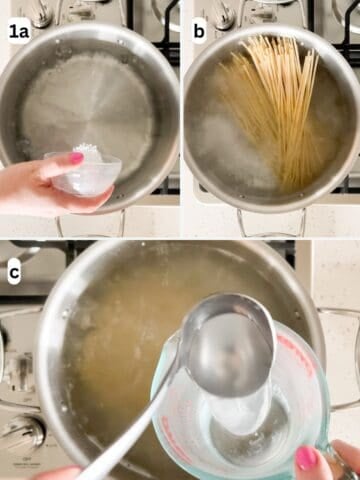
- Fill a large pot with a gallon of water and bring it to a boil. Stir in the kosher salt (image 1a). Then add the bucatini (image 1b) and cook extra al dente (about 1 minute less than package instructions). A few minutes before the pasta is done, reserve 3 cups of pasta water (image 1c) and set aside. Drain the pasta when ready.
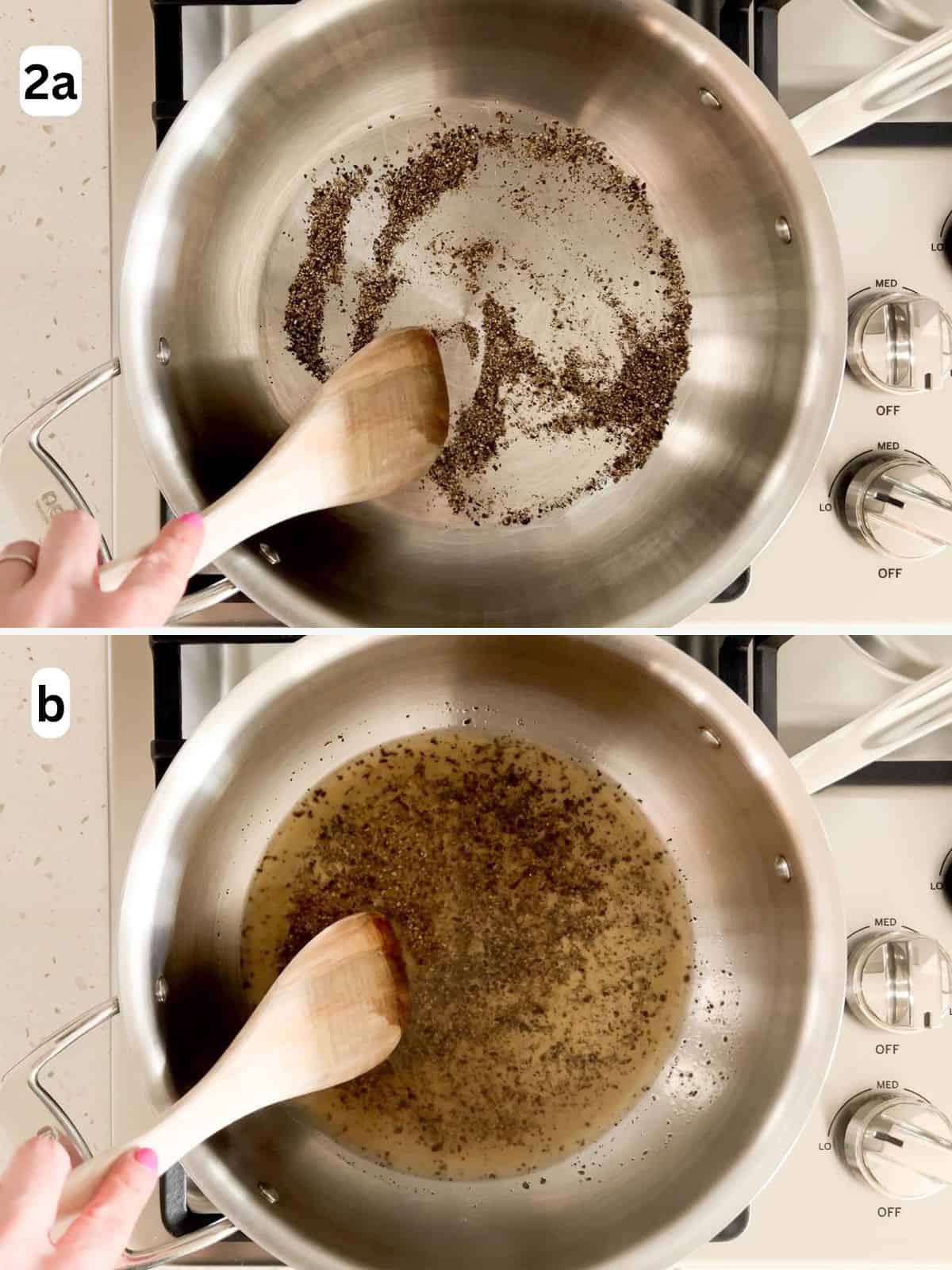
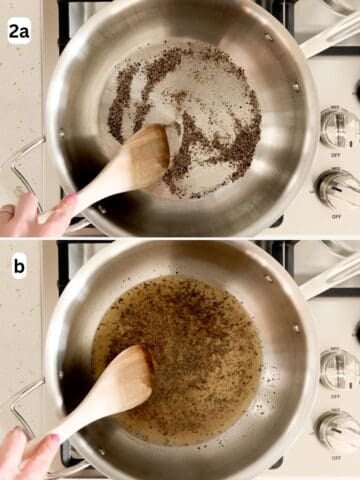
- while the pasta cooks, toast the cracked black pepper in a large skillet over low heat until fragrant, about 1 to 2 minutes (image 2a). Then add ½ cup of the reserved pasta water to the pan, stirring to combine (image 2b). Turn off the heat and transfer the skillet to a cool surface. This pan will remain off the heat for the rest of the recipe.

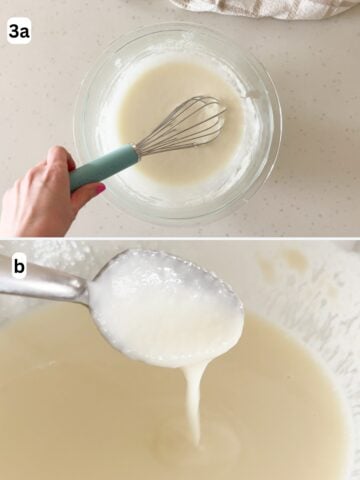
- while the pasta finishes cooking, place the Pecorino Romano in a large mixing bowl. Let the reserved pasta water sit for a couple of minutes so it's hot but not boiling (below 180°F/82°C). Then slowly whisk about 1 cup of pasta water into the Pecorino Romano, a few tablespoons at a time (image 3a). Keep whisking until the cheese forms a creamy, pourable mixture that glides off the spoon but is not watery (image 3b). If the mixture is too thick, whisk in more pasta water a tablespoon at a time.
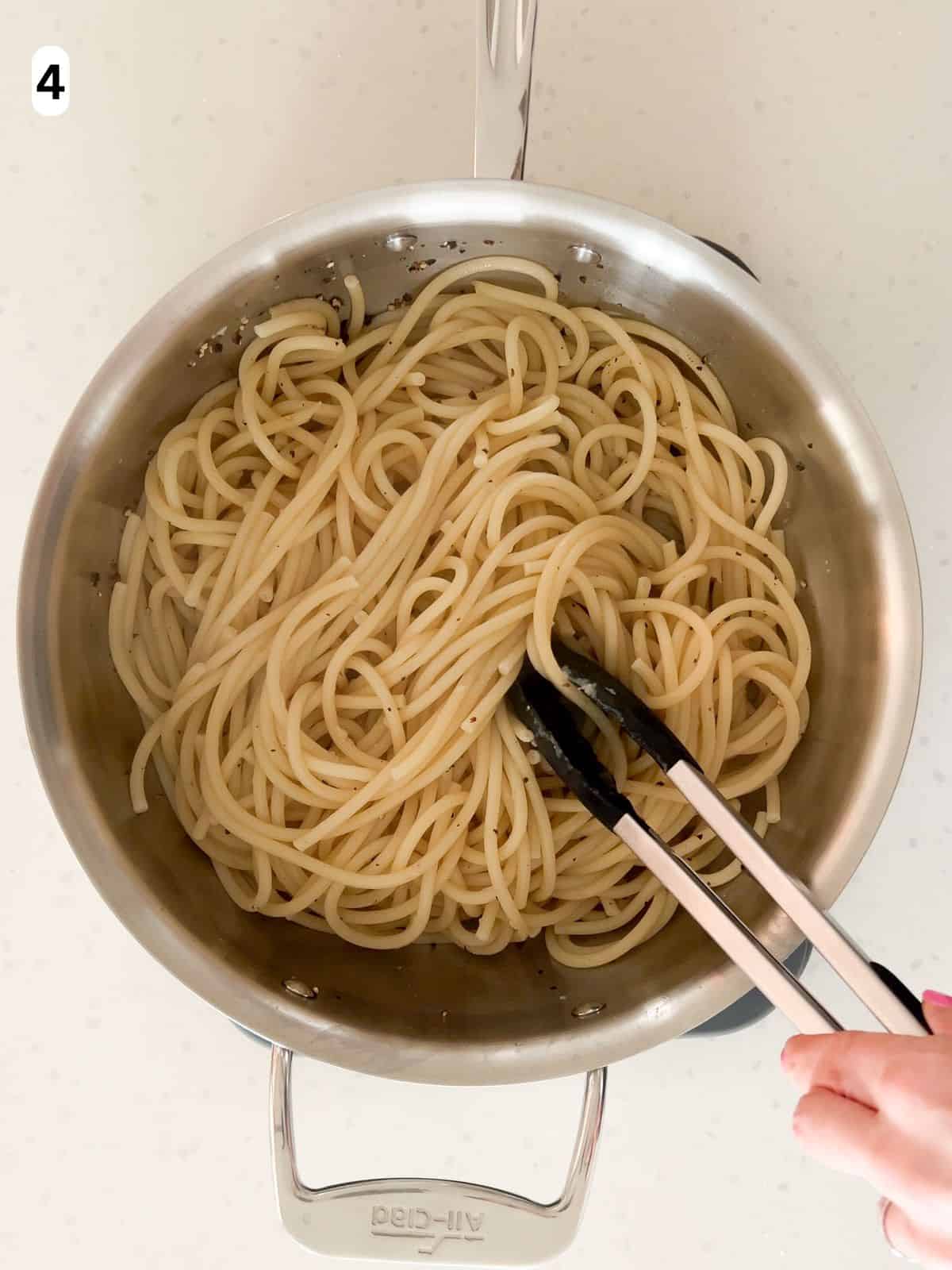
- add the drained bucatini directly to the pan with the black pepper mixture while it is off the heat. Toss for 1 minute until the pasta is evenly coated and the heat has slightly reduced (image 4). The pasta should be warm, but not so hot that it will cause the cheese to clump.

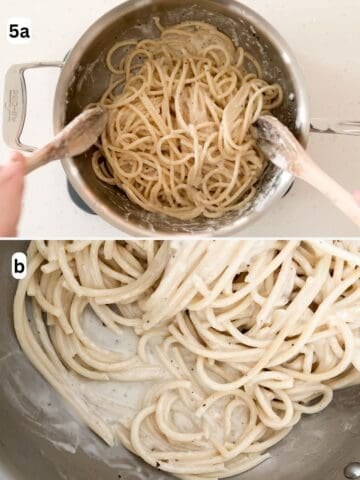
- pour the Pecorino Romano mixture onto the pasta and toss vigorously (image 5a). When done, the sauce should be emulsified and creamy (image 5b). If the sauce is too thick, add more reserved pasta water a tablespoon at a time until it reaches a creamy consistency. If it is too thin, add a bit more finely grated Pecorino Romano and toss again.
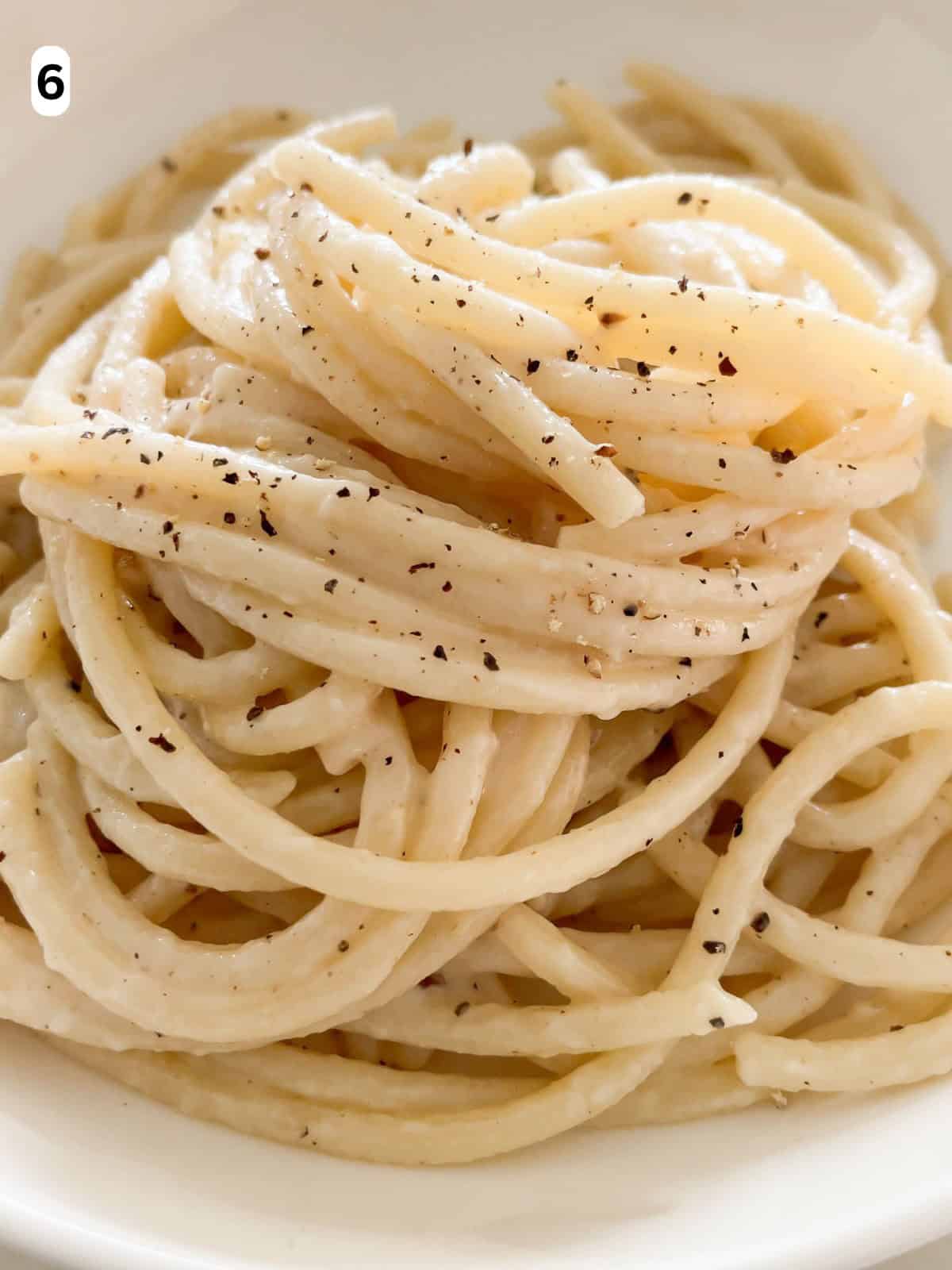
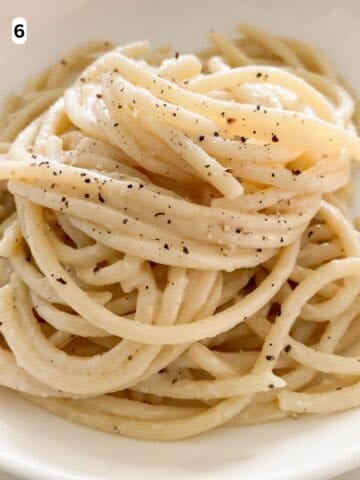
- garnish with extra Pecorino Romano and freshly cracked pepper (image 6). Serve immediately and enjoy!
Storage & Reheating
- Storage: Bucatini cacio e pepe is best enjoyed right away while the sauce is creamy, but any leftovers can be stored as follows:
- refrigerator: store in an airtight container for up to 2 days. Refrigerate the leftover pasta water too - it can help loosen the sauce when reheating.
- freezer: not recommended because the pasta can become mushy with a grainy sauce.
- Reheating: all leftovers should be reheated to 165°F (74°C) throughout.
- stovetop: for best results, gently reheat the pasta in a skillet over low heat with a splash of pasta water to loosen the sauce. Stir continuously and avoid high heat, which can cause the cheese to separate.
- microwave: if you're short on time, heat in 20-30 second increments, stirring between each. Add a spoonful of pasta water to bring back some creaminess.
For more helpful information on how to handle leftovers safely, check out this USDA Leftovers and Food Safety guide.
Expert Tips
- Watch the heat closely to prevent clumps. When mixing the pasta water with the Pecorino Romano, it should be hot but not boiling (180°F/82°C or lower). When combining the pasta and cheese, keep the pan completely off the heat.
- Cook a pound of pasta in 1 gallon of water. This smaller ratio leaves the water starchy enough to emulsify the sauce while still giving the pasta room to cook.
- Save more pasta water than you think you'll need (about 3 cups per pound of pasta) and keep extra finely grated Pecorino Romano on hand. This gives you flexibility to fix a sauce that's too thin or thick. The extra water can even refresh leftovers.
- Measure the Pecorino Romano accurately so the sauce has the proper texture. Using a food scale is the most reliable option. If you don't have one, fluff the grated cheese, lightly spoon it into a measuring cup without packing it down, and level off the top with the back of a knife.
- Whisk the Pecorino Romano with pasta water to form a creamy mixture before adding it to the pasta. This jump-starts emulsification, so the cheese blends smoothly and is less likely to clump.
Save This Recipe! 💌
FAQ
A cacio e pepe sauce that is too thin usually occurs when too much pasta water is mixed into the Pecorino Romano. The fix is simple: add a bit more finely grated cheese while tossing vigorously until the sauce thickens.
A cacio e pepe sauce that is too thick usually means not enough pasta water was added. Simply add more pasta water a tablespoon at a time while tossing vigorously until the sauce loosens and becomes creamy.
Cacio e pepe will clump for two reasons: 1) using a pre-shredded cheese with anti-caking agents that cause uneven melting or 2) exposing the Pecorino Romano to too much heat.
Once the cheese has seized into firm lumps, as shown in the image below, it can't be reversed. The pasta will still taste great, though! You can pick out the larger clumps and loosen the sauce with a splash of pasta water. And don't stress, it happens to everyone! I've rushed dinner before, forgotten to take the pan off the heat, and ended up with clumpy cacio e pepe. My husband jokingly calls those clumps "Italian pepper jack" and he loves them!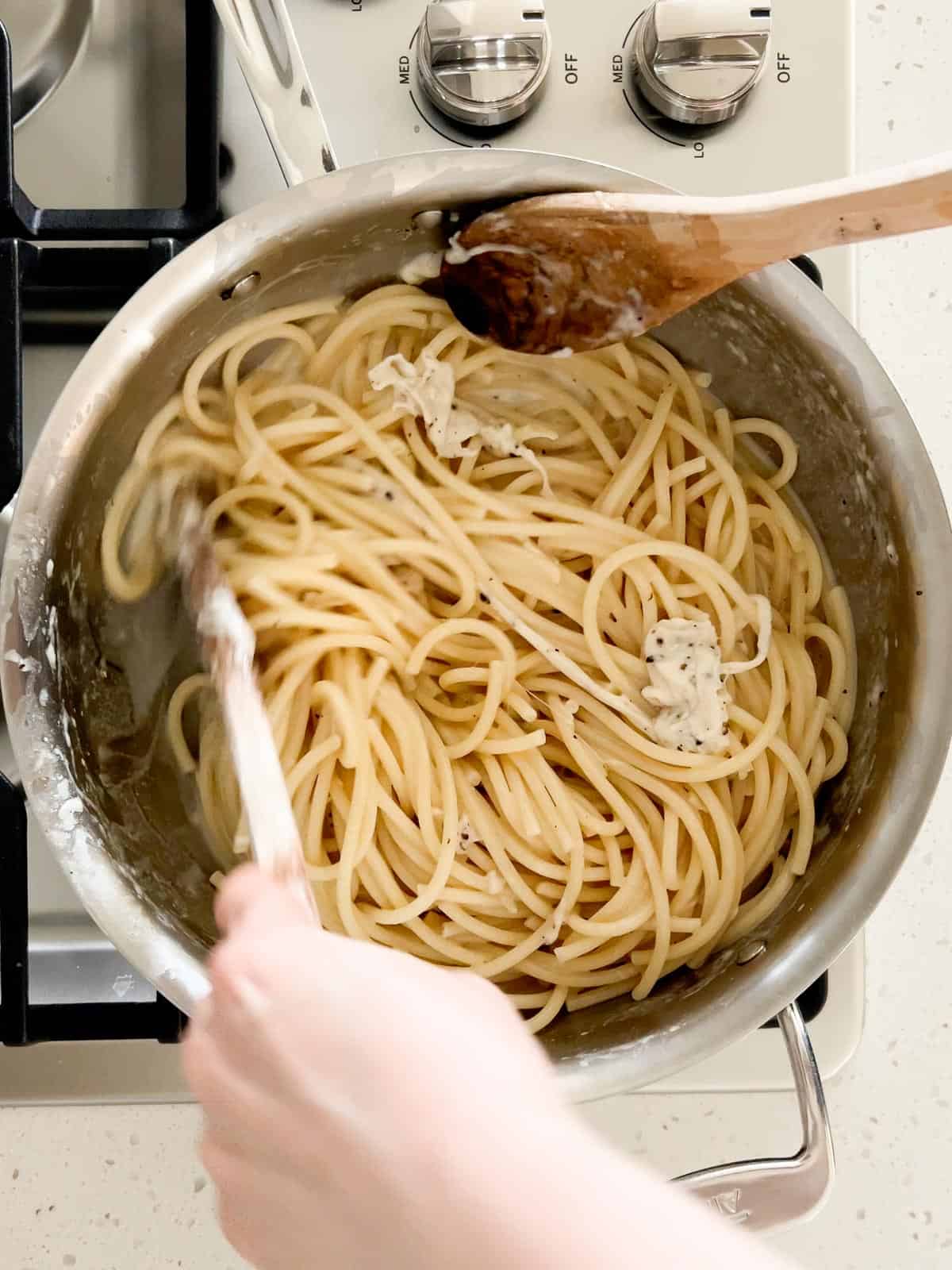
Related
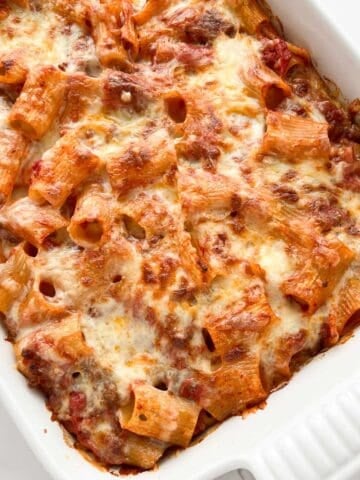
Looking for more cheesy pastas? Try these favorites:



Pairing
These are my favorite dishes to serve with cacio e pepe:




Did you make this recipe? Leave a star rating and comment below! Subscribe to my newsletter for more Italian recipes, straight to your inbox!
Recipe

Cacio e Pepe (with Bucatini)
Save This Recipe! 💌
Ingredients
- 1½ teaspoons kosher salt (plus more to taste)
- 1 pound bucatini (dried)*
- 2 teaspoons black pepper (freshly cracked)
- 2 cups Pecorino Romano (finely grated, plus extra as needed)*
Instructions
- Cook the pasta: fill a large pot with a gallon of water and bring it to a boil. Stir in the kosher salt. Add the bucatini and cook extra al dente (about 1 minute less than the package instructions). A few minutes before the pasta is done, reserve 3 cups of pasta water and set aside. Then drain the pasta when ready.

- Toast the black pepper: while the pasta cooks, toast the cracked black pepper in a large skillet over low heat until fragrant, about 1 to 2 minutes. Then add ½ cup of reserved pasta water to the pan, stirring to combine. Turn off the heat and remove the skillet from the burner onto a cool surface. This pan will stay off the heat for the remainder of the recipe.
- Prepare the sauce: while the pasta finishes cooking, place the Pecorino Romano in a large mixing bowl. Let the reserved pasta water sit for a couple of minutes so it's hot but not boiling (below 180°F/82°C). Then slowly whisk about 1 cup of pasta water into the Pecorino Romano, a few tablespoons at a time. Continue whisking until the cheese forms a creamy, pourable mixture that glides off the spoon but is not watery. If it's too thick, add more pasta water a tablespoon at a time.
- Combine the pasta and pepper: add the drained bucatini to the pan with the black pepper mixture (while off the heat). Toss for 1 minute, until the pasta is evenly coated and has slightly cooled. At this point, the pasta should be warm, but not so hot that it will cause the cheese to clump.
- Add the cheese mixture: pour in the Pecorino Romano mixture and toss vigorously until the sauce emulsifies and coats the pasta. If the sauce is too thick, add more reserved pasta water a tablespoon at a time until it's creamy. If it is too thin, add a bit more finely grated Pecorino Romano and toss again.
- Serve: garnish with extra Pecorino Romano and freshly cracked black pepper, if desired. Serve immediately and enjoy!

Video
Notes
- Bucatini: you can use a different long, thin pasta. Spaghetti, tonnarelli, or linguine are great options.
- Pecorino Romano: grate it fresh on the finest side of a box grater so it melts smoothly into the sauce. Packaged, pre-shredded cheese may melt unevenly, causing a clumpy sauce. Accurate measurement is important for the sauce's texture. A food scale is the most reliable. If you don't have one, fluff the grated cheese, lightly spoon it into a measuring cup without packing it down, and level off the top with the back of a knife. Have extra on hand in case the sauce is too thin when you get to Step 5 of the recipe.
- Use a different cheese: you could use DOP Parmigiano Reggiano or Grana Padano instead, although the final result will have a milder taste than traditional Roman cacio e pepe.
- Add a topping: I love garnishing with pangrattato for extra flavor and crunch!
- Fresh pasta conversion: use 1½ pounds of fresh pasta for every pound of dried. Adjust the cook time accordingly. Since fresh pasta is less absorbent, it may need less pasta water when finishing the sauce.
- Storage: cacio e pepe is best enjoyed right away, while the sauce is creamy. Leftovers can be refrigerated for up to 2 days in an airtight container. Refrigerate the extra pasta water to refresh the sauce when reheating. I don't recommend freezing because the leftovers will become mushy and grainy.
- Reheating: add a bit of pasta water to the leftovers to help loosen the sauce. For best results, gently reheat in a skillet over low heat, stirring continuously. You can also microwave the leftovers in 20-30 second increments, stirring between each. All leftovers should be reheated to 165°F (74°C) throughout.
Nutrition
The provided nutrition and storage information is estimated. Accuracy is not guaranteed.
See our Disclaimer for more information.


Maria D'Errico says
I hope you enjoy my cacio e pepe recipe as much as my family does! I love this recipe for it's simple ingredients, creamy sauce, and bold, comforting flavor. I'd love to hear what you think!