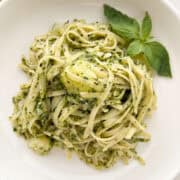
Pasta al Pesto
This authentic pasta al pesto recipe is bursting with flavor! Using simple ingredients and a homemade pesto, it's the ultimate comfort food. It's easy to make and takes less than 30 minutes!
Servings: 8
Calories: 527kcal
Ingredients
- 1 pound russet potatoes (about 3 medium potatoes)*
- 2 tablespoons kosher salt (plus more to taste)
- 3 cups fresh basil leaves
- ¼ cup pine nuts *
- 3 cloves garlic
- ¾ cup Pecorino Romano (finely grated)*
- ¾ cup Parmigiano Reggiano (finely grated)*
- ½ cup extra virgin olive oil
- 1 pound linguine (dried)*
Instructions
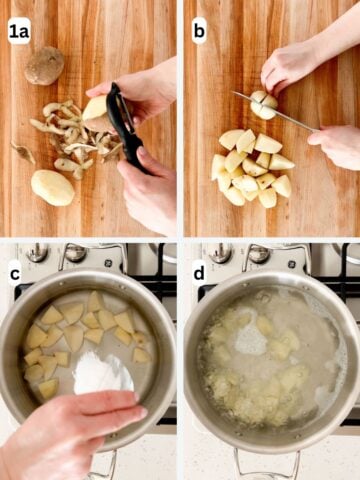
- Prepare and boil the potatoes: Wash and peel the potatoes. Cut them into even-sized pieces about 1 to 2 inches wide. Then place the potatoes in a large pot with water. Add the 2 tablespoons of salt and stir. Bring the water to a boil and boil the potatoes for 5 minutes.
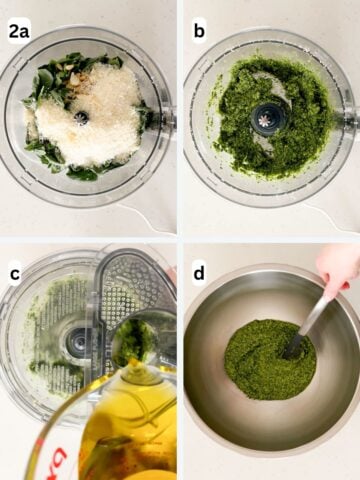
- Make the pesto: While the potatoes are boiling, put the basil, pine nuts, garlic, Pecorino Romano, and Parmigiano Reggiano in a food processor or blender. Pulse the ingredients until they are finely chopped. While still pulsing, slowly pour in the olive oil. Pulse until the pesto is combined but slightly chunky. Then transfer the pesto to a large bowl and season it with salt to taste. I add about ½ teaspoon of salt in this step. Keep in mind you will later add pasta water to the pesto, which will increase the saltiness.
- Boil the pasta with the potatoes: After the potatoes have boiled for 5 minutes, add the pasta to the same pot. Boil together until the pasta is al dente (about 8 to 10 minutes). Just before draining the pasta and potatoes, reserve 1 cup of pasta water. Pour ½ cup of the pasta water into the bowl with the pesto, mixing to combine. Set aside the rest of the pasta water for later.
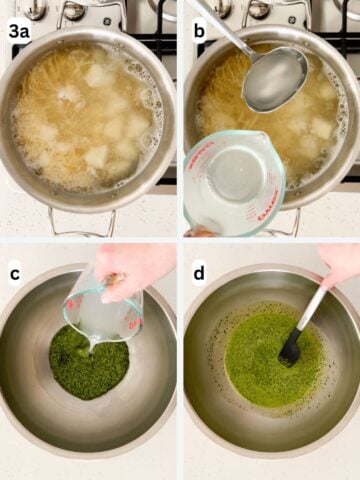
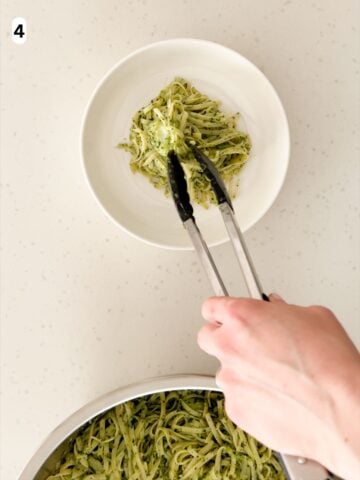
- Toss the pasta and potatoes in the pesto: Add the drained pasta and potatoes to the large bowl with the pesto. Toss together with tongs until evenly coated. Add more pasta water as needed to reach your desired consistency. Serve immediately while warm. Enjoy!
Video
Notes
- Russet potatoes: you can substitute these with the same amount of another potato of your choice. New potatoes or Yukon golds are great options. You can also omit the potatoes altogether.
- Pine nuts: these can be substituted with the same amount of another nut. Walnuts or cashews are delicious options.
- Pecorino and Parmigiano Reggiano: for the best flavor, I recommend grating your own cheeses. If Pecorino Romano and/or Parmigiano Reggiano are unavailable, you can substitute with regular parmesan cheese, aged Asiago, or Grana Padano.
- Linguine: you can substitute this for a different pasta shape. Long pasta cuts like spaghetti, fettuccini, trenette, or trofie go great with pesto. Fusilli is a delicious option because the corkscrew shape holds onto the pesto.
- Fresh pasta conversion: substitute 1½ pounds of fresh pasta for each pound of dried. Adjust the cooking time accordingly, as the fresh pasta will need less time. Keep in mind that the potatoes need to boil about 10-15 minutes total, and should be done at the same time as the pasta.
- Dairy-free version: omit the cheese for a dairy-free pesto. When doing so, you may need to add more salt to taste. When making the pesto, reduce the amount of olive oil to ¼ cup, adding more if needed to reach your desired consistency.
- Add green beans: it's common for Genovese pasta with pesto to include green beans. It's a fun way to add veggies and texture into the dish. Cut ¼ pound (110 grams) of green beans into 1 inch pieces and boil them at the same time as you add the pasta.
- Equipment: food processor or blender. I prefer a food processor because you can pulse the pesto and have better control over the texture.
- Storage: leftovers can be stored in an airtight container in the refrigerator for up to 3 days. I like to refrigerate some pasta water to freshen up the leftovers. I don't recommend freezing because the pasta can become mushy.
- Reheating: drizzle a bit of pasta water over the leftovers. Reheat in a skillet over medium-low heat or in a microwave safe bowl, using 30-minute increments in the microwave. All leftovers should be reheated to 165°F (74°C) throughout.
- Make ahead: you can make the pesto ahead of time, but do not cook the pasta. Store the pesto in an airtight container with a small layer of olive oil on top to preserve its freshness. Keep in the refrigerator for up to 3 days or the freezer for up to 3 months. Thaw overnight in the refrigerator before use.
Nutrition
Serving: 1.5cups | Calories: 527kcal | Carbohydrates: 56g | Protein: 16g | Fat: 28g | Saturated Fat: 6g | Trans Fat: 0g | Cholesterol: 13mg | Sodium: 1331mg | Potassium: 497mg | Fiber: 4g | Sugar: 2g | Vitamin C: 6mg | Calcium: 208mg | Iron: 2mg
